Living with opioids: A qualitative study with patients with chronic low back pain
Identificadores
URI: http://hdl.handle.net/10498/24012
DOI: 10.1111/hex.13089
ISSN: 1369-6513
ISSN: 1369-7625 (internet)
Ficheros
Estadísticas
Métricas y Citas
Exportar a





Metadatos
Mostrar el registro completo del ítem
Fecha
2020-06Fuente
Health Expectations. 2020;23:1118–1128.Resumen
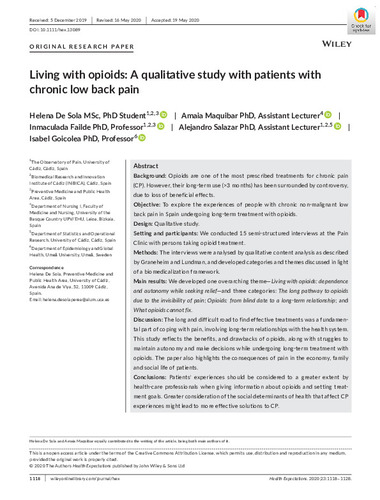
Background Opioids are one of the most prescribed treatments for chronic pain (CP). However, their long-term use (>3 months) has been surrounded by controversy, due to loss of beneficial effects. Objective To explore the experiences of people with chronic non-malignant low back pain in Spain undergoing long-term treatment with opioids. Design Qualitative study. Setting and participants We conducted 15 semi-structured interviews at the Pain Clinic with persons taking opioid treatment. Methods The interviews were analysed by qualitative content analysis as described by Graneheim and Lundman, and developed categories and themes discussed in light of a biomedicalization framework. Main results We developed one overarching theme-Living with opioids: dependence and autonomy while seeking relief-and three categories:The long pathway to opioids due to the invisibility of pain; Opioids: from blind date to a long-term relationship; andWhat opioids cannot fix. Discussion The long and difficult road to find effective treatments was a fundamental part of coping with pain, involving long-term relationships with the health system. This study reflects the benefits, and drawbacks of opioids, along with struggles to maintain autonomy and make decisions while undergoing long-term treatment with opioids. The paper also highlights the consequences of pain in the economy, family and social life of patients. Conclusions Patients' experiences should be considered to a greater extent by health-care professionals when giving information about opioids and setting treatment goals. Greater consideration of the social determinants of health that affect CP experiences might lead to more effective solutions to CP.
Colecciones
- Artículos Científicos [11777]
- Articulos Científicos Biomedicina [577]
- Articulos Científicos Est. I.O. [354]
- Artículos Científicos INIBICA [1083]

Esta obra está bajo una Licencia Creative Commons Atribución 4.0 Internacional