A multicentric study on stigma towards people with mental illness in health sciences students
Identificadores
URI: http://hdl.handle.net/10498/25315
DOI: 10.1186/s12909-021-02695-8
ISSN: 1472-6920
Ficheros
Estadísticas
Métricas y Citas
Exportar a





Metadatos
Mostrar el registro completo del ítem
Fecha
2021-06Fuente
BMC Med Educ 21, 324 (2021)Resumen
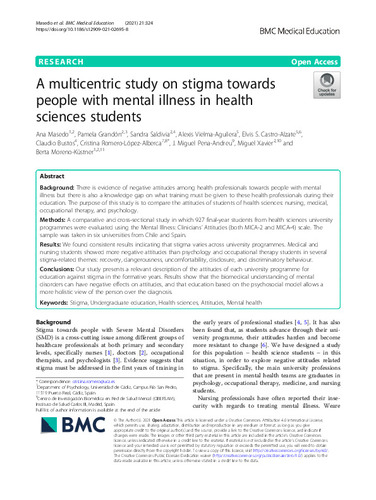
BackgroundThere is evidence of negative attitudes among health professionals towards people with mental illness but there is also a knowledge gap on what training must be given to these health professionals during their education. The purpose of this study is to compare the attitudes of students of health sciences: nursing, medical, occupational therapy, and psychology.MethodsA comparative and cross-sectional study in which 927 final-year students from health sciences university programmes were evaluated using the Mental Illness: Clinicians' Attitudes (both MICA-2 and MICA-4) scale. The sample was taken in six universities from Chile and Spain.ResultsWe found consistent results indicating that stigma varies across university programmes. Medical and nursing students showed more negative attitudes than psychology and occupational therapy students in several stigma-related themes: recovery, dangerousness, uncomfortability, disclosure, and discriminatory behaviour.ConclusionsOur study presents a relevant description of the attitudes of each university programme for education against stigma in the formative years. Results show that the biomedical understanding of mental disorders can have negative effects on attitudes, and that education based on the psychosocial model allows a more holistic view of the person over the diagnosis.
Colecciones
- Artículos Científicos [11777]
- Articulos Científicos Psicología [433]

Esta obra está bajo una Licencia Creative Commons Atribución 4.0 Internacional