Adherence to Mediterranean Diet Is Associated With Better Glycemic Control in Children With Type 1 Diabetes: A Cross-Sectional Study
Ficheros
Estadísticas
Métricas y Citas
Exportar a





Metadatos
Mostrar el registro completo del ítem
Fecha
2022-03Fuente
Frontiers in Nutrition, Vol. 9Resumen
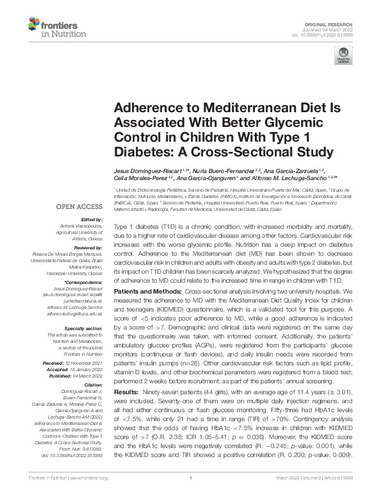
Type 1 diabetes (T1D) is a chronic condition, with increased morbidity and mortality, due to a higher rate of cardiovascular disease among other factors. Cardiovascular risk increases with the worse glycemic profile. Nutrition has a deep impact on diabetes control. Adherence to the Mediterranean diet (MD) has been shown to decrease cardiovascular risk in children and adults with obesity and adults with type 2 diabetes, but its impact on T1D children has been scarcely analyzed. We hypothesized that the degree of adherence to MD could relate to the increased time in range in children with T1D. Patients and MethodsCross-sectional analysis involving two university hospitals. We measured the adherence to MD with the Mediterranean Diet Quality Index for children and teenagers (KIDMED) questionnaire, which is a validated tool for this purpose. A score of <5 indicates poor adherence to MD, while a good adherence is indicated by a score of >7. Demographic and clinical data were registered on the same day that the questionnaire was taken, with informed consent. Additionally, the patients' ambulatory glucose profiles (AGPs), were registered from the participants' glucose monitors (continuous or flash devices), and daily insulin needs were recorded from patients' insulin pumps (n=28). Other cardiovascular risk factors such as lipid profile, vitamin D levels, and other biochemical parameters were registered from a blood test, performed 2 weeks before recruitment, as part of the patients' annual screening. ResultsNinety-seven patients (44 girls), with an average age of 11.4 years (+/- 3.01), were included. Seventy-one of them were on multiple daily injection regimens, and all had either continuous or flash glucose monitoring. Fifty-three had HbA1c levels of <7.5%, while only 21 had a time in range (TIR) of >70%. Contingency analysis showed that the odds of having HbA1c 7 (O.R. 2.38; ICR 1.05-5.41; p = 0.036). Moreover, the KIDMED score and the HbA1c levels were negatively correlated (R: -0.245; p-value: 0.001), while the KIDMED score and TIR showed a positive correlation (R: 0.200; p-value: 0.009). ConclusionsOur data suggest that adherence to MD may contribute to better glycemic control in children. This should be taken into account at the time of nutritional education on T1D patients and their families.
Colecciones
- Artículos Científicos [12006]
- Artículos Científicos INIBICA [1093]
- Articulos Científicos Mat. Inf. Rad. [137]

Esta obra está bajo una Licencia Creative Commons Atribución 4.0 Internacional