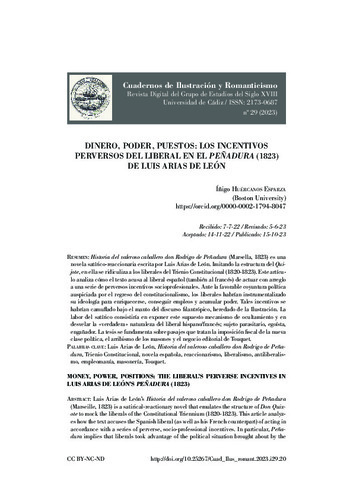
Dinero, poder, puestos: los incentivos perversos del liberal en el Peñadura (1823) de Luis Arias de León
Identificadores
URI: http://hdl.handle.net/10498/29497
DOI: 10.25267/Cuad_Ilus_romant.2023.i29.20
ISSN: 2173-0687
Ficheros
Estadísticas
Métricas y Citas
Exportar a





Metadatos
Mostrar el registro completo del ítemTítulo alternativo
Money, power, positions: the liberal’s perverse incentives in Luis Arias de León’s Peñadura (1823)
Fecha
2023-10-15Fuente
Cuadernos de Ilustración y Romanticismo - 2023. Nº 29, pp. 381-394Resumen
Historia del valeroso caballero don Rodrigo de Peñadura (Marsella, 1823) es una novela satírico-reaccionaria escrita por Luis Arias de León. Imitando la estructura del Quijote, en ella se ridiculiza a los liberales del Trienio Constitucional (1820-1823). Este artículo analiza cómo el texto acusa al liberal español (también al francés) de actuar con arreglo a una serie de perversos incentivos socioprofesionales. Ante la favorable coyuntura política auspiciada por el regreso del constitucionalismo, los liberales habrían instrumentalizado su ideología para enriquecerse, conseguir empleos y acumular poder. Tales incentivos se habrían camuflado bajo el manto del discurso filantrópico, heredado de la Ilustración. La labor del satírico consistiría en exponer este supuesto mecanismo de ocultamiento y en desvelar la «verdadera» naturaleza del liberal hispano/francés; sujeto parasitario, egoísta, engañador. La tesis se fundamenta sobre pasajes que tratan la imposición fiscal de la nueva clase política, el arribismo de los masones y el negocio editorial de Touquet. Luis Arias de León’s Historia del valeroso caballero don Rodrigo de Peñadura(Marseille, 1823) is a satirical-reactionary novel that emulates the structure of DonQuixote to mock the liberals of the Constitutional Triennium (1820-1823). This article analyzes how the text accuses the Spanish liberal (as well as his French counterpart) of acting in accordance with a series of perverse, socio-professional incentives. In particular, Peñadura implies that liberals took advantage of the political situation brought about by the return of constitutionalism to enrich themselves, obtain public positions, and accumulate power. Such self-serving instrumentalization of their ideology was camouflaged under the cloak of Enlightenment like philanthropic speech. The work of the satirist consists of exposing this alleged mechanism of concealment and revealing the «true» nature of the Hispanic/French liberal; a parasitic, selfish, deceitful subject. To prove my thesis, I discuss a series of passages dealing with the taxation imposed by the new political class, the careerism within Freemasonry, and Touquet’s publishing business.
Colecciones

Esta obra está bajo una Licencia Creative Commons Attribution-NonCommercial-NoDerivatives 4.0 Internacional