Carbohydrates digestion and metabolism in the spiny lobster (Panulirus argus): Biochemical indication for limited carbohydrate utilization
Statistics
Metrics and citations
Export





Metadata
Show full item record
Date
2017Source
PeerJ - 2017, Vol. 2017 n. 11 pp. 1-21Abstract
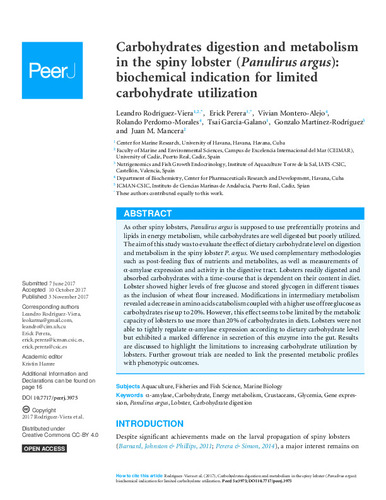
As other spiny lobsters, Panulirus argus is supposed to use preferentially proteins and lipids in energy metabolism, while carbohydrates are well digested but poorly utilized. The aim of this study was to evaluate the effect of dietary carbohydrate level on digestion and metabolism in the spiny lobster P. argus. We used complementary methodologies such as post-feeding flux of nutrients and metabolites, as well as measurements of α-amylase expression and activity in the digestive tract. Lobsters readily digested and absorbed carbohydrates with a time-course that is dependent on their content in diet. Lobster showed higher levels of free glucose and stored glycogen in different tissues as the inclusion of wheat flour increased. Modifications in intermediary metabolism revealed a decrease in amino acids catabolism coupled with a higher use of free glucose as carbohydrates rise up to 20%. However, this effect seems to be limited by the metabolic capacity of lobsters to use more than 20% of carbohydrates in diets. Lobsters were not able to tightly regulate α-amylase expression according to dietary carbohydrate level but exhibited a marked difference in secretion of this enzyme into the gut. Results are discussed to highlight the limitations to increasing carbohydrate utilization by lobsters. Further growout trials are needed to link the presented metabolic profiles with phenotypic outcomes.
Collections
- Artículos Científicos [11777]
- Articulos Científicos Biología [857]
- Artículos Científicos INMAR [1027]

This work is under a Creative Commons License Attribution-NonCommercial-NoDerivatives 4.0 Internacional