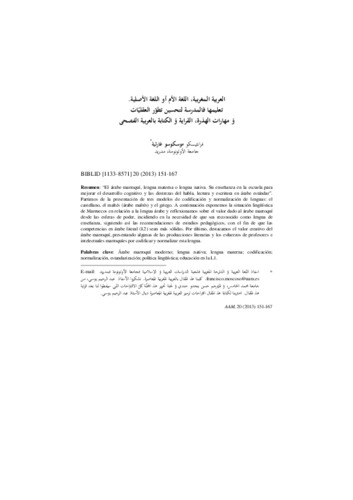
al-ˁarabiyya al-maġribiyya, allūġat al-umm āw al-lūġat al-aṣliyya. taˁlīmha f al-madrasa li taḥsīn taṭawwur al-ˁaqliyyāt u mahārāt al-haḏra, alqrāya w al-kitāba b el-ˁarabiyya el-fuṣḥa
Ficheros
Estadísticas
Exportar a





Metadatos
Mostrar el registro completo del ítemTítulo alternativo
Moroccan Arabic, mother tongue or native language. Teaching Moroccan Arabic at school to improve thinking, speaking, reading and writing skills in Standard Arabic
Autor/es
Moscoso García, Francisco
Fecha
2013-01-01Fuente
AL-ANDALUS MAGREB (11338571)- 2013, n. 20 - p. 151-167Resumen
Partimos de la presentación de tres modelos de codificación y normalización de lenguas: el
castellano, el maltés (árabe maltés) y el griego. A continuación exponemos la situación lingüística
de Marruecos en relación a la lengua árabe y reflexionamos sobre el valor dado al árabe marroquí
desde las esferas de poder, incidiendo en la necesidad de que sea reconocido como lengua de
enseñanza, siguiendo así las recomendaciones de estudios pedagógicos, con el fin de que las
competencias en árabe literal (L2) sean más sólidas. Por último, destacamos el valor creativo del
árabe marroquí, presentando algunas de las producciones literarias y los esfuerzos de profesores e
intelectuales marroquíes por codificar y normalizar esta lengua. We begin
with the presentation of three models of coding and standardization of languages: the Castilian, the
Maltese (Maltese Arabic) and the Greek. Following it, we discuss the linguistic situation in Morocco
with the emphasis on the Arabic language. The Moroccan Arabic has’nt any value in the eyes of the
local authorities and for it, we stress that Moroccan Arabic needs to be recognized as the language of
instruction, following the recommendations of Educational Studies, aiming to improve the
knowledge of Standard Arabic. Finally, we emphasize the creative value of any language, presenting
some of the literary works in Moroccan Arabic and the efforts of a group of Moroccan enthusiasts,
including teachers and intellectuals to codify and standardize Moroccan Arabic.
Colecciones

Esta obra está bajo una Licencia Creative Commons Attribution-NonCommercial-NoDerivatives 4.0 International